How Artificial Intelligence Is Transforming Modern Industries
 Posted On
Artificial Intelligence (AI) is no longer a futuristic concept, it’s a present-day force that’s driving innovation, enhancing efficiency, and transforming the way industries operate. From healthcare and finance to manufacturing and retail, AI is unlocking new levels of performance and changing how businesses deliver value to their customers.
Below, we explore how AI is revolutionizing key industries and what it means for the future of work, service, and innovation.
1. Healthcare: Intelligent Diagnosis and Personalized Care
AI is playing a vital role in the healthcare industry, offering smarter, faster, and more accurate solutions to complex problems.
Early Disease Detection
AI algorithms are now being used to detect diseases like cancer, heart conditions, and neurological disorders by analyzing medical images and patient records with high accuracy. This enables early diagnosis and timely treatment.
Personalized Treatment Plans
AI-driven systems analyze a patient’s medical history, genetic information, and lifestyle data to suggest personalized treatment strategies. This ensures better outcomes and minimizes the trial-and-error approach often seen in conventional medicine.
2. Finance: Enhanced Security and Smarter Investments
The financial sector has rapidly adopted AI to improve operations, reduce risk, and provide more personalized services.
Fraud Detection
Machine learning models are capable of analyzing thousands of transactions in real time to identify suspicious patterns. This helps in preventing fraudulent activity and enhancing customer trust.
Algorithmic Trading
AI algorithms process massive datasets to make split-second trading decisions, often outperforming traditional models. These systems learn from market trends to predict future behavior and adjust investments accordingly.
3. Manufacturing: The Age of Smart Factories
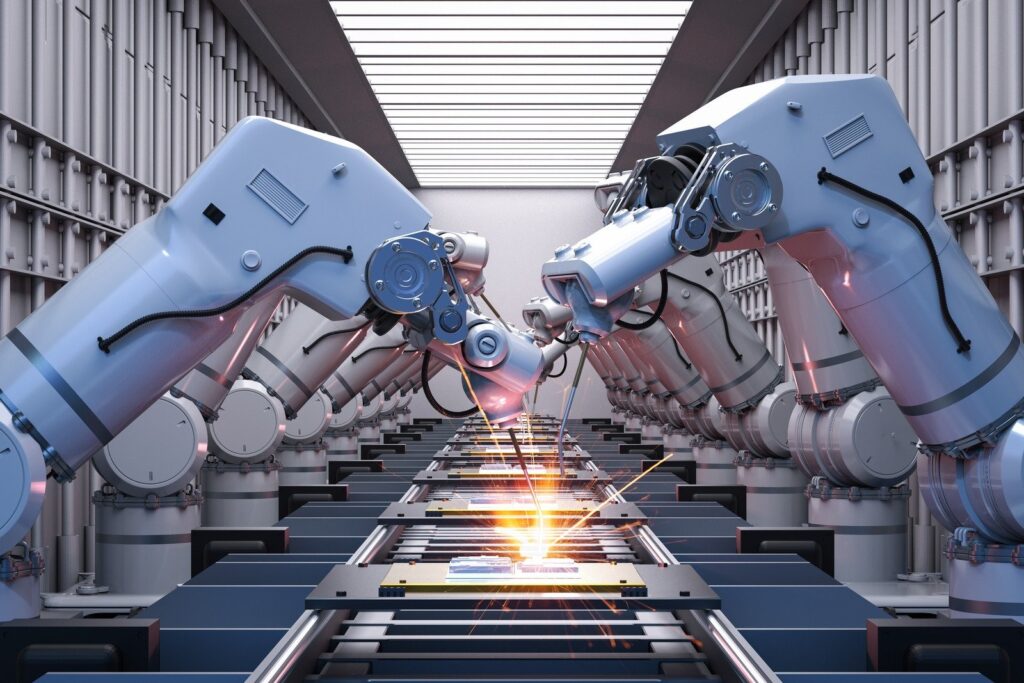
AI is a key component of Industry 4.0, transforming traditional manufacturing operations into smart factories.
Predictive Maintenance
AI-powered sensors and monitoring systems help detect when equipment is likely to fail, allowing companies to perform maintenance before a breakdown occurs, minimizing downtime and saving costs.
Quality Control and Automation
Computer vision and AI tools are used to monitor production lines and spot defects that might go unnoticed by humans. Robotics and AI also automate repetitive tasks, improving consistency and efficiency.
4. Retail: Personalization and Optimized Operations
AI is significantly changing the retail landscape, both online and in-store.
Personalized Shopping Experiences
E-commerce platforms use AI to analyze customer behavior and deliver personalized product recommendations, increasing sales and customer satisfaction.
Inventory and Demand Forecasting
Retailers use AI to predict demand patterns, manage inventory more efficiently, and make smarter decisions about stocking, pricing, and promotions.
5. Transportation and Logistics: Intelligent Mobility
AI is powering the next generation of transportation and logistics, making mobility smarter, safer, and more efficient.
Autonomous Vehicles
Self-driving technology, powered by AI, is being tested and implemented to improve road safety and reduce human error in driving. Companies like Tesla and Waymo are leading the way in autonomous mobility.
Smart Logistics and Routing
AI helps logistics companies determine the most efficient delivery routes, monitor shipment conditions, and predict delays ultimately reducing costs and improving delivery timelines.
6. Education: Adaptive Learning and Efficient Administration
AI is redefining the education sector by creating personalized learning experiences and automating administrative tasks.
Adaptive Learning Platforms
AI-based platforms adjust lesson plans and learning materials based on each student’s performance, ensuring they progress at their own pace and receive support where needed.
Teacher Assistance
AI tools can automate grading, analyze student data, and identify learning gaps, allowing educators to focus more on teaching than paperwork.
7. Challenges and Ethical Considerations
While AI offers immense benefits, it also comes with significant challenges and ethical responsibilities.
Job Displacement
As automation becomes more widespread, some roles particularly in manual or repetitive tasks are at risk of being replaced. Upskilling and reskilling the workforce will be essential.
Bias and Data Privacy
AI systems are only as good as the data they’re trained on. If data is biased or incomplete, it can lead to unfair or inaccurate outcomes. Ensuring transparency, fairness, and ethical use of AI is critical for its long-term success.
Conclusion: AI Is Shaping the Future of Industry
Artificial Intelligence is not just a trend, it’s a transformative technology that is reshaping industries across the board. Whether it’s enabling doctors to diagnose diseases faster, helping retailers personalize customer experiences, or powering autonomous vehicles, AI is pushing boundaries and redefining what’s possible.